CDCR will close two more prisons and shut down parts of six others | News
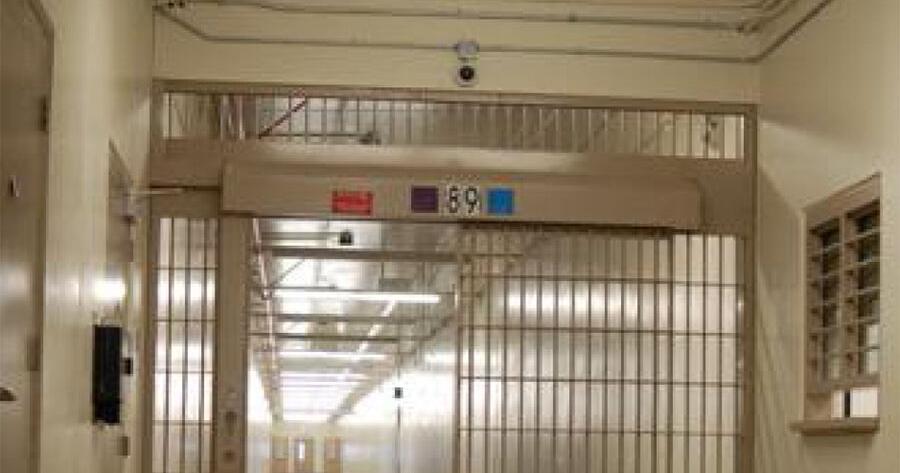
California’s state prison population has dropped by about 22 percent in the last four years and on Tuesday the California Department of Corrections and Rehabilitation announced plans to close two more prisons — including one in Kern County. The department also plans to deactivate parts of six other prisons, including Facility D at the California Correctional Institution at Tehachapi.
Prisons to be closed include Chuckawalla State Prison — one of two facilities in Blythe — and the California City Correctional Facility, which the state leases.
What the department calls deactivations are planned at six prisons, the CDCR said. In addition to Facility D at CCI, these are Facility A at the California Rehabilitation Center, Facility D at the California Institution for Men, Facility C at Pelican Bay State Prison, the West Facility at the California Men’s Colony and the Folsom Women’s Facility.
The state deactivated the Level I facility at CCI in September 2021, essentially “mothballing” the prison’s original buildings there in case they are needed in the future.
That’s apparently the plan for the latest planned deactivations.
“Should a significant need for capacity arise in the future due to a natural disaster or other serious need, this option gives the state the possibility to reactivate these facilities at a later date,” the news release stated.
In part because of the Level I deactivation — and in part because of the continued downward trend in the state prison population — the incarcerated population at CCI has declined by about 25 percent since November 2019 — slightly more than the overall decline.
Because prison staffing is related to inmate population, another deactivation at CCI — in addition to the state’s closure of the California City facility — may have an economic impact on the city of Tehachapi.
“We are in communication with our local state elected officials and are trying to determine what the impact will be to our community, most importantly the jobs of Tehachapi residents who staff both facilities,” City Manager Greg Garrett said in a news release on Tuesday.
“The prisons are an economic driver for both communities where the prisons are located,” he noted. “We know there will be both short-term and long-term harm to the region due to these decisions made in Sacramento.”
An attempt to contact the city manager in California City was not immediately successful.
California City facility
The state has leased a facility in California City since late 2013. It is the last contract facility used by CDCR and was once necessary to help address overcrowding in state prisons, the agency said. The lease has cost the state $32 million per year, the department said.
“Now that the term of the lease is expiring and there is additional space at nearby facilities, it makes sense to transition our staff and population into our state-owned facilities, the CDCR said in a news release.
As of Nov. 30, the incarcerated population at the leased facility was 1,906. The 2,560-bed facility is owned by the publicly-traded firm CoreCivic, headquartered in Nashville, Tenn., (formerly known as Corrections Corporation of America).
A spokesperson for CoreCivic responded to a request for comment on Tuesday.
“CoreCivic is immensely proud of our opportunity over the past nine years to help California successfully manage through its historic challenges with prison overcrowding,” Steve Owen of the company said. “Our partnership has demonstrated the value and flexibility we provide to governments across our full range of solutions, including through innovative lease agreements like the one at the California City Correctional Center.
“Over the course of our partnership at CCCC, we have provided California with modernized capacity to deliver vital reentry programming and healthcare services that have improved the quality of life and work for individuals incarcerated there and the hundreds of state employees caring for them,” he added.
Owen said that the company understands that CDCR’s announced plans to allow the contract to expire at the end of March 2024 are part of the state’s ongoing budgeting process to reduce systemwide capacity due to a declining population.
“We are in contact with California officials to discuss the state’s plans, including the decision on the lease agreement, with the understanding that the budget process is still ongoing,” he said.
Impact on staff
The CDCR did not immediately respond to a request for the number of staff who will be impacted by the California City prison closure and deactivation of another facility at CCI.
In the news release, the department said it will work to minimize the impact on staff and the related communities.
“CDCR will work to limit the impact to employees affected by these closures and deactivations,” the agency said. “This will include options to transfer both within and outside of impacted counties, and identification of employees for redirection to neighboring prisons where there are existing identified vacancies.”
Other prisons
The state once had 34 adult prisons, including the leased facility and a prison hospital facility at Stockton. During the 2020-21 budget process, Gov. Gavin Newsom announced plans to close two state prisons.
The first, Deuel Vocational Institution in Tracy, closed in September 2021. But plans for closure of the California Correctional Center were derailed for a time when the city of Susanville south of the state. In early September the lawsuit was dismissed. Although the CDCR’s prison closure website states that the prison will close in 2023, the agency’s weekly report shows no inmates at the facility since Oct. 26
The state has three other prisons in Kern County — North Kern and Kern Valley state prisons in Delano and Wasco State Prison. Collectively their inmate populations are down about 18 percent from November 2019, official reports show. Another state prison near Tehachapi and California City is in Lancaster — California State Prison, Los Angeles County. That prison’s population has dropped about 23 percent in the past four years.
At the end of November 2019, state prisons were at 131.5 percent of design capacity, according to CDCR population reports. On Nov. 30 they were at 108.5 percent of design capacity. The same reports showed that staffing has been reduced by only about 9 percent during that period.
Claudia Elliott is a freelance journalist and former editor of the Tehachapi News. She lives in Tehachapi and can be reached by email: [email protected].